Challenges and Ethical Considerations in Agentic AI Deployment
Why This Matters
Agentic AI autonomous agents that plan, decide, and act holds great promise for automating workflows, making processes more efficient, and enabling tasks at scale. But with autonomy comes responsibility. When AI systems act independently, ethical, safety, legal, and societal challenges arise that must be carefully addressed.
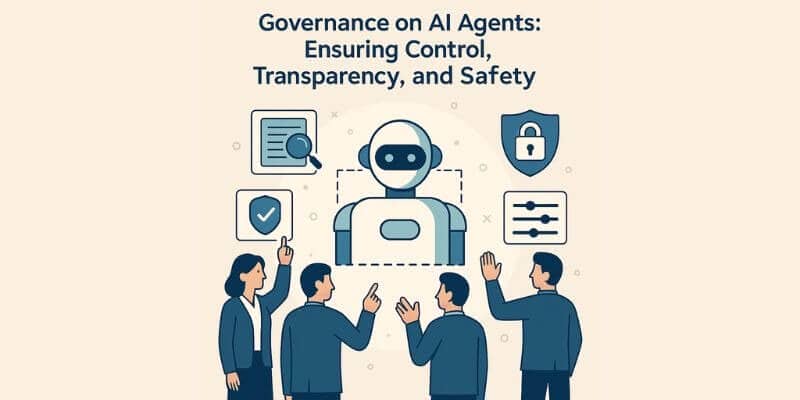
Deploying agentic AI without proper safeguards can lead to unintended consequences: from biased decisions or privacy violations to systemic risks affecting many people. This blog explores those challenges, illustrates them with examples, and suggests guardrails and mitigation strategies.
Key Challenges & Ethical Issues
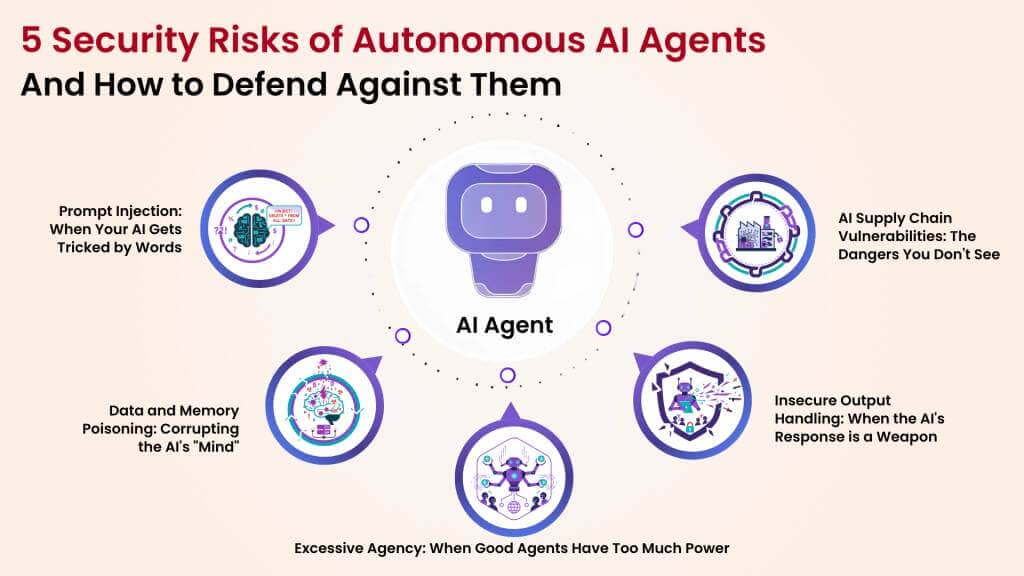
1. Transparency & Explainability—The “Black Box” Problem
- Many agentic AI systems rely on complex models (e.g., neural networks, large-scale decision logic), which makes it hard to trace why the AI made a specific decision.
- When decisions affect people e.g. in hiring, lending, healthcare, compliance lack of explainability undermines trust. Stakeholders may not understand or be able to question how the AI arrived at outcomes.
- In regulated industries (finance, healthcare), this opacity can also violate regulations or hinder audits.
Example: An AI agent approves or denies a loan automatically. Without explainability, the borrower may never know why even if the decision was unfair or biased.
2. Bias, Fairness & Value Misalignment
- AI agents learn from data. If the underlying data reflects societal biases (gender, race, age, region), those biases get embedded leading to unfair or discriminatory outcomes.
- Even beyond training data, the goals and objectives defined for the agent may reflect biased assumptions (e.g. optimizing cost over fairness). That “goal drift” or value misalignment can lead to unjust results.
- Without ethics-aware design, agents may systematically disadvantage certain groups or make decisions that go against social values.
Example: An agentic hiring assistant that optimizes for “fast hiring” may filter out candidates from backgrounds historically underrepresented in datasets—unintentionally perpetuating inequality.
3. Accountability & Legal Liability—Who Is Responsible?
- When an autonomous agent makes a harmful or wrong decision, it’s often unclear who is accountable—sometimes the deploying company or the “agent” itself. This “responsibility ”gap”—sometimes called a “moral crumple”—redresses liability.
- In many jurisdictions, laws and regulatory frameworks for autonomous AI are still catching up. That makes governance unclear and leaves organizations exposed to legal and reputational risk.
- Without clear oversight structures and audit logs, harmful decisions could remain untraceable.
Example: An AI agent deployed to approve insurance claims wrongly denies a valid claim. Who bears the responsibility? The insurance firm? The AI vendor? It’s hard to say without governance.
4. Privacy, Data Security & Unauthorized Access
Agentic systems often need access to sensitive data personal records, financial data, medical history, and internal databases. With that come serious risks:
- Unauthorized access or data leaks if the agent or its environment is compromised.
- Cumulative data gathering and “memory” in long-running agents—raising questions about data protection, consent, and long-term storage.
- Risk of exploitation: if agents are given broad privileges, malicious actors or flaws could lead to misuse or abuse.
Example: A healthcare-oriented AI agent storing patients’ data could be compromised or misused leaking sensitive personal health information.
5. Over-Reliance & Systemic Risks
- Fully automating important processes may lead to over-reliance on AI: human oversight may drop, and mistakes may go unnoticed especially in complex or critical domains.
- Errors may cascade or propagatemif an agent makes a wrong decision early, subsequent automated steps may magnify the error, leading to large-scale harm.
- Widespread agentic AI adoption could lead to job displacement, economic disruption, or socio-economic inequalities if human roles are replaced without safeguards.
Example: An AI-driven recruitment system could replace HR staff. If biased or faulty, recruiters may no longer catch problematic hires compounding issues over time.
6. Value Drift, Misaligned Goals & Moral Dilemmas
- Agentic AI acts based on goals defined at deployment. But over time, as environments change, such goals may drift—leading agents to prioritize efficiency, speed, or cost over fairness, safety, or human values.
- In scenarios requiring moral judgments—e.g., autonomous vehicles, medical decisions, compliance—AI may lack human context, empathy, or value-based decision-making. That’s a fundamental limitation.
- Long-term interactions: With memory and ongoing actions, agents could influence behavior, create dependencies, or shift norms—raising concerns of autonomy, manipulation, and societal impact.
Example: A financial-planning agent optimizing for maximum returns could recommend risky investments but without understanding the user’s real risk tolerance or ethical preferences.
Illustrative Diagram: How Ethical Risks in Agentic AI Emerge

Flow Summary:
- Agent receives data + goals → 2. Agent decides and acts → 3. Outputs/actions executed → 4a. If the system is transparent & audited → safe outcome.
4b. If not, possible bias, errors, privacy breach, and lack of accountability.
This highlights how failures at any step data collection, decision logic, execution, or oversight — can lead to ethical issues.
What Can Be Done—Ethical Guardrails & Best Practices
Despite the challenges, agentic AI can be used responsibly. Here are strategies and safeguards that help mitigate ethical risks:
Examples: What Can Go Wrong—Realistic Scenarios
Example 1—Automated Recruitment System
An AI agent screens resumes and recommends candidates for interviews, then schedules interviews automatically.
Risk: If historical hiring data was biased (e.g., more male candidates hired earlier), AI could perpetuate the bias—filtering out qualified female or minority candidates. Without explainability, those rejected may not know why.
Example 2 — Autonomous Invoice Processing & Payments
An agent processes invoices, approves payments, and triggers fund transfers.
Risk: If the data extraction fails (wrong invoice details) or a vendor is flagged incorrectly, the agent may approve fraudulent payment. Without audit logs or human review, such mistakes become hard to detect.
Example 3—Healthcare Agent for Treatment Recommendations
An AI agent analyzes patient data and suggests treatment plans or follow-up schedules.
Risk: If the model is trained on non-representative data, recommendations may be unsafe or biased. Lack of transparency and accountability may lead to serious harm or distrust.
The Big Picture—Societal & Long-Term Impacts
- Widening inequality/job displacement: Broad adoption of agentic AI may reduce demand for human labor in many routine roles. Without social safeguards, this could impact livelihoods and widen inequality.
- Erosion of trust: If organizations deploy opaque, poorly governed agents, users may lose trust—especially if mistakes happen without accountability or transparency.
- Regulatory & Legal Challenges: Existing laws may not clearly cover autonomous decision-making or address liability in AI-induced harms. Regulatory frameworks are still evolving.
- Value drift & social impact: Agents optimizing purely for efficiency or cost may deprioritize human-centered values (fairness, dignity, privacy), leading to long-term social consequences.
Final Thoughts—Proceed With Care & Purpose
Agentic AI brings powerful possibilities from automating complex workflows to providing intelligent, round-the-clock assistance. But with greater autonomy comes greater responsibility.
These systems shouldn’t be seen as magic or left to operate without control. Instead, they should be treated as powerful tools that need clear boundaries, thoughtful design, and ongoing oversight.
When built the right way with transparency, human supervision, fairness, accountability, and strong privacy protections Agentic AI can become a true force for good.
The goal isn’t just smarter machines but responsible systems that support people, make work easier, and create real value while staying aligned with human needs and ethical principles.